


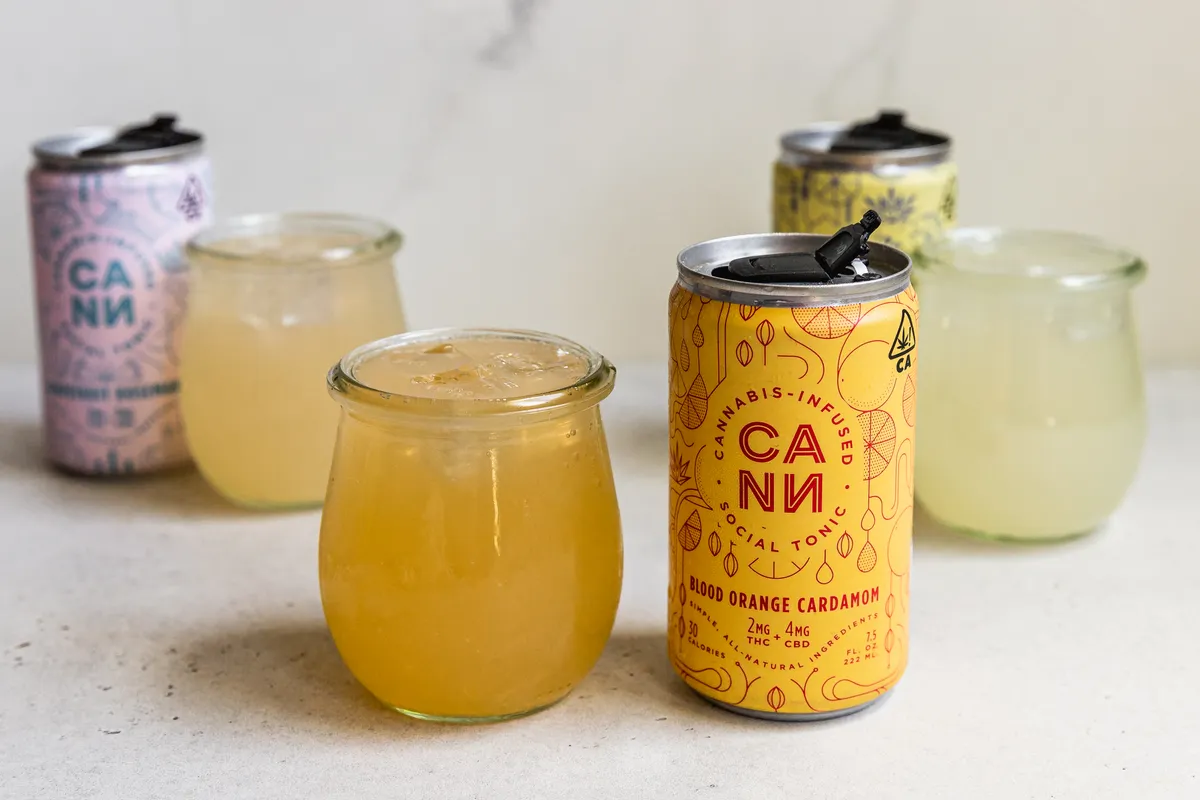
The debate over THC drinks versus alcohol health risks has moved well beyond wellness circles and into peer-reviewed research, with a growing body of evidence suggesting cannabis beverages carry a meaningfully different risk profile from ethanol, though not a clean bill of health. Alcohol has been classified as a Group 1 carcinogen by the World Health Organisation, a designation that, according to registered dietitian Whitney Stuart, M.S., R.D.N., C.D.E., means ‘there is no established safe level of consumption.’
Stuart goes further: alcohol is ‘linked to at least seven types of cancer, liver damage, and disrupted sleep, even at low doses.’ Her assessment of cannabis beverages, by contrast, is that ‘their documented systemic harms are significantly less than those of alcohol at moderate levels’, though she stops well short of calling them health foods.
The First Study of Its Kind on Cannabis Beverages and Alcohol Harm Reduction
Much of the current conversation is anchored by a study published this month in the Journal of Psychoactive Drugs, described by the University at Buffalo School of Public Health and Health Professions as the first of its kind to focus specifically on cannabis beverages and their potential as an alcohol harm reduction tool. The lead researcher, Jessica S. Kruger, Ph.D., M.C.H.E.S., clinical associate professor at the University at Buffalo, says the findings challenge simple assumptions about substitution behaviour.
The study surveyed 438 anonymous adults who had used cannabis in the past year, drawing on alcohol consumption items from the Behavioral Risk Factor Surveillance System (BRFSS). According to the PubMed listing of the study, those who cited reducing other substance use were more likely to use cannabis beverages, at 45.8%. Kruger’s broader conclusion: ‘some adults are using cannabis beverages as a substitute for alcohol, and many reported reducing how much they drink and how often they binge drink.’
That is a potentially consequential finding given what is known about alcohol’s risks. Liver disease, cancer, cardiovascular disease, pancreatitis, neurologic harm, Kruger describes alcohol as having ‘a much stronger evidence base’ linking it to all of these conditions, along with a large overall burden of morbidity and mortality.
THC Drinks Versus Alcohol Health Risks Are Not Symmetrical
Cannabis beverages sidestep ethanol exposure entirely and, being smoke-free, avoid the respiratory risks associated with inhaled cannabis. Those are two concrete harm-reduction advantages Kruger identifies. But the product category is young, and she is careful not to overstate the case: ‘THC drinks and alcohol carry different risks rather than one being universally “safe.”‘
In real time, the two substances work through entirely different mechanisms. Alcohol slows the central nervous system, impairing coordination, reaction time and judgement. THC acts on the endocannabinoid system, producing relaxation or euphoria in some users but also, in others, altered perception, anxiety, nausea, paranoia and changes in heart rate or blood pressure. The onset timing creates its own hazard. ‘A key problem is that people may drink more before the first dose has fully taken effect, especially if they assume the onset will be immediate like alcohol,’ Kruger warns.
Certain groups face elevated risk from THC beverages specifically. Those who are pregnant or breastfeeding, have a history of substance use disorder or certain mental health conditions, take interacting medications, or have cardiovascular concerns should consult a clinician or avoid use altogether, according to Kruger.
On organ health, the evidence gap between the two categories is stark. A substantial body of research documents a direct link between alcohol consumption and liver damage; no equivalent evidence exists for cannabis beverages. Kruger’s caveat is precise: ‘”Less damaging than alcohol” is not the same thing as “proven harmless,” and long-term beverage-specific data are still limited.’
What Researchers Still Do Not Know
The unanswered questions are substantial. Kruger lists the long-term health effects of repeated beverage use, cardiovascular risk by dose and formulation, how beverage pharmacokinetics differ across products, the accuracy of THC labels in the real world, the level of impairment different doses produce, and how co-use with alcohol changes the overall risk calculation. Each of those gaps matters before any authoritative comparative judgement can be made.
The reminder that alcohol itself was once considered broadly benign, moderate consumption was for years associated in some studies with cardiovascular benefit, is not a trivial one. The Journal of Psychoactive Drugs study represents an early but meaningful step towards filling those gaps, and Kruger’s team at Buffalo is expected to build on it as the cannabis beverage market continues to expand.