


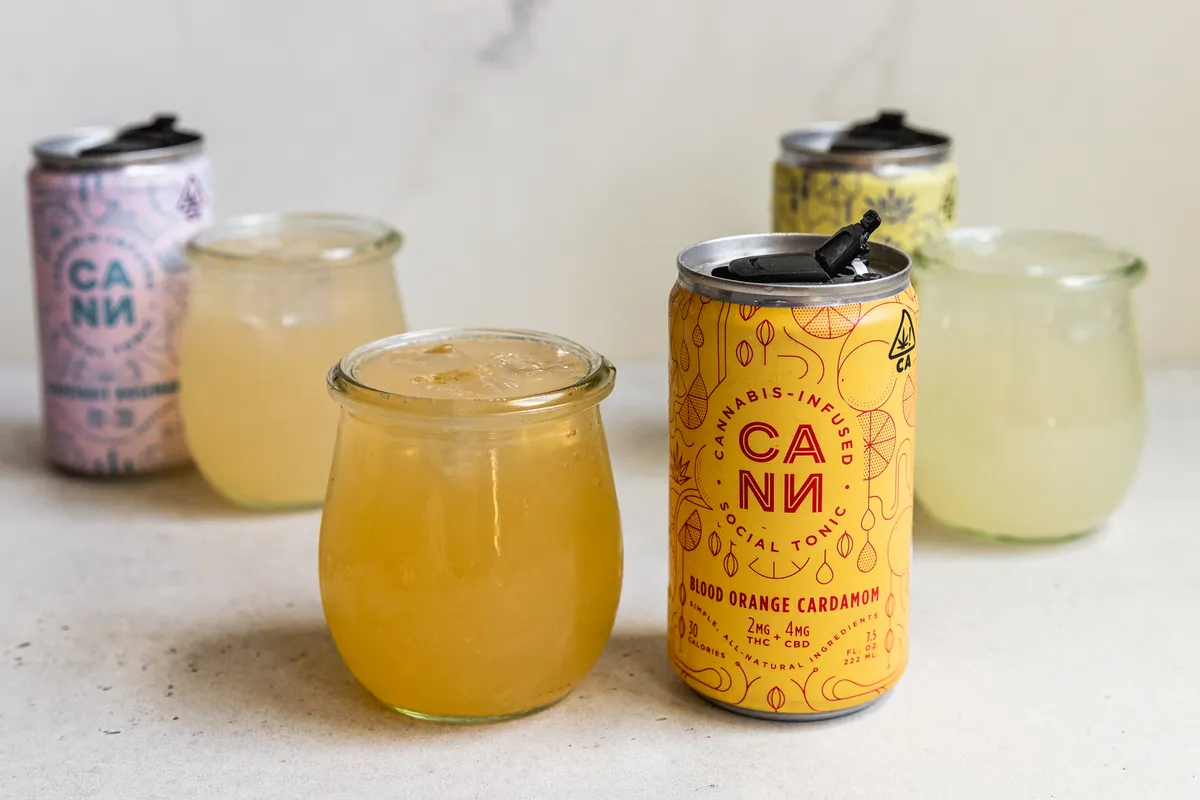
The debate around THC drinks vs alcohol health risks has sharpened considerably as cannabis-infused beverages move from niche curiosity to mainstream alternative. A study published in the Journal of Psychoactive Drugs found that people who consumed cannabis-infused beverages cut their alcohol intake nearly in half, adding hard data to what had largely been anecdotal reports of drinkers switching sides.
The research, described by the University at Buffalo School of Public Health and Health Professions as the first of its kind to focus specifically on cannabis beverages and their potential as an alcohol harm-reduction tool, surveyed 438 anonymous adults who reported using cannabis in the past year. Of those, around one third reported consuming beverages infused with non-intoxicating cannabidiol (CBD), and more than half, 56 per cent, reported also consuming alcoholic beverages, according to Yahoo Finance.
One finding stands out: people who consumed cannabis beverages were more likely to report substituting cannabis for alcohol, at 59 per cent, than those who consumed cannabis in other forms, at 47 per cent. That gap suggests something specific about the drink format itself, not just the substance, may be driving the substitution behaviour.
What the Experts Say About THC Drinks vs Alcohol Health Risks
Jessica S. Kruger, Ph.D., M.C.H.E.S., clinical associate professor at the University at Buffalo, has been central to this research. ‘My research looks at cannabis from a public health perspective, particularly how newer products like THC beverages are used and whether they may serve as a harm reduction tool,’ she says. ‘In our recent study, we found that some adults are using cannabis beverages as a substitute for alcohol, and many reported reducing how much they drink and how often they binge drink.’
Kruger is careful, however, not to declare a winner. ‘The short answer is that THC drinks and alcohol carry different risks rather than one being universally safe,’ she says. Alcohol, she adds, ‘has a much stronger evidence base linking it to liver disease, cancer, cardiovascular disease, pancreatitis, neurologic harm, and a large overall burden of morbidity and mortality.’
That evidence base is considerable. The World Health Organization has classified alcohol as a Group 1 carcinogen. Registered dietitian Whitney Stuart, M.S., R.D.N., C.D.E., explains what that means in practice: ‘There is no established safe level of consumption. It’s linked to at least seven types of cancer, liver damage, and disrupted sleep, even at low doses.’ Stuart adds that, while THC beverages are not considered health foods, ‘their documented systemic harms are significantly less than those of alcohol at moderate levels.’
The Risks on the Cannabis Side
THC beverages are not without their own concerns. They can impair judgement, trigger anxiety and paranoia, and may carry cardiovascular and dependence risks. THC affects people differently, and certain groups should avoid them entirely or consult a clinician first: those who are pregnant or breastfeeding, have a history of substance use disorder or certain mental health conditions, take interacting medications, or have existing cardiovascular concerns.
One specific behavioural risk is worth flagging. Because THC drinks do not produce the near-immediate onset that alcohol does, users may consume more before the first dose has fully taken effect. ‘A key problem is that people may drink more before the first dose has fully taken effect, especially if they assume the onset will be immediate like alcohol,’ Kruger says.
On organ health, the comparison currently favours cannabis beverages, but only tentatively. Clear evidence links alcohol directly to liver damage; no equivalent body of evidence exists yet for THC drinks. Kruger is precise about what that does and does not mean: ‘Less damaging than alcohol is not the same thing as proven harmless, and long-term beverage-specific data are still limited.’
Among the unanswered questions researchers are still working through: the long-term effects of repeated beverage use, cardiovascular risk by dose and formulation, the accuracy of THC labels in the real world, and how co-use with alcohol changes risk. The harm-reduction advantages Kruger points to are genuine in the meantime: THC beverages are smoke-free, avoiding the respiratory exposures of smoking cannabis, and they contain no ethanol, which matters given alcohol’s established links to liver disease and cancer.
The Journal of Psychoactive Drugs study represents the first systematic attempt to quantify the cannabis-beverage substitution effect, and its finding that beverage consumers substitute at a higher rate than other cannabis users gives researchers a sharper question to pursue: whether format alone is influencing the harm-reduction outcome, or whether the people choosing drinks over other delivery methods were already more motivated to cut back on alcohol.