


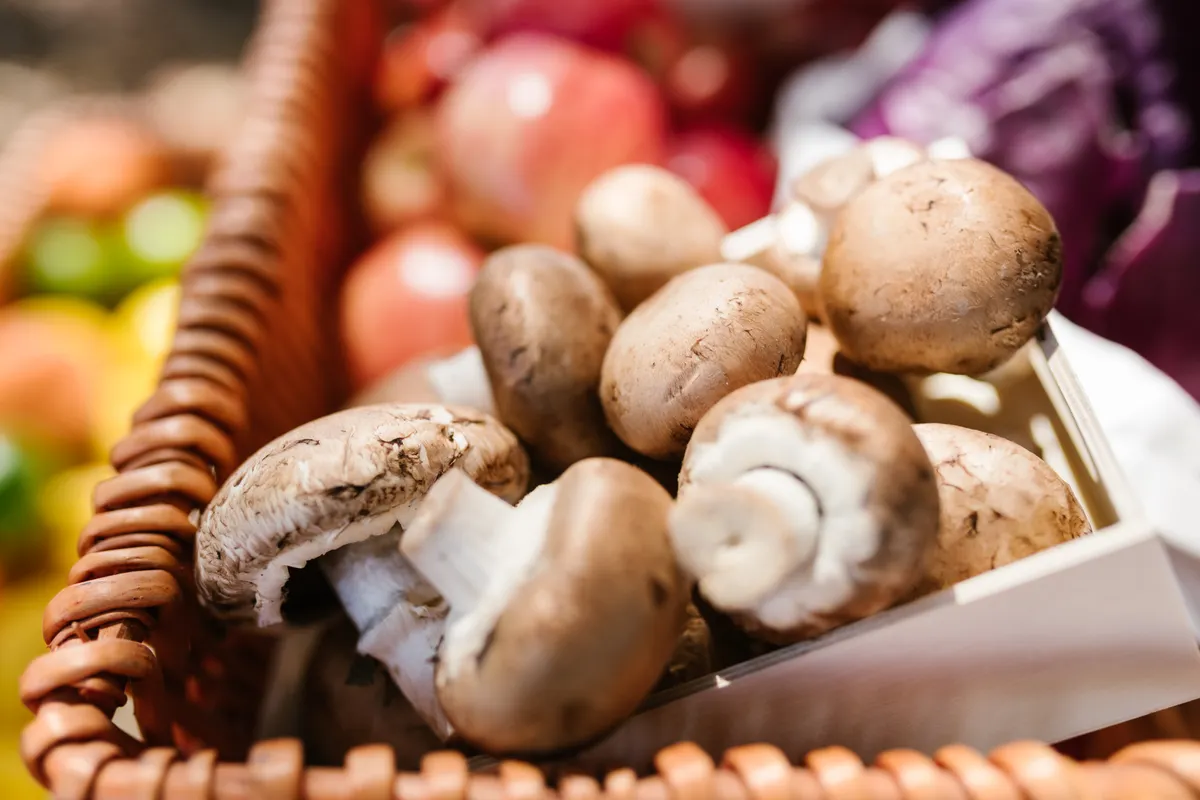
Mushroom spoilage and storage questions tend to arise at the worst possible moment: mid-meal-prep, when a slimy, discoloured specimen surfaces from the bottom of a pack you were counting on for dinner. The good news is that one bad mushroom does not automatically condemn the rest, but knowing exactly what to look for, and how to store what remains, matters.
How to Tell Mushrooms Have Turned
Smell is the first line of diagnosis. Bryan Quoc Le, founder and principal food consultant at Mendocino Food Consulting, points to a specific bacterial process: ‘A certain set of bacteria that consume mushrooms and can cause illness produce ammonia from the tissue of mushrooms, leading to a smell similar to cat urine.’ Stephen Chavez, senior chef-instructor at the Institute of Culinary Education’s Los Angeles campus, puts it plainly: mushrooms should smell earthy and musty, but never ‘bad or off.’
Appearance is the other tell. ‘The best sign that mushrooms have gone bad is when they become slimy or mushy in texture,’ Chavez says. They can also dry out and become wrinkly at the other extreme. Quoc Le notes that mushrooms are especially prone to a green mould called Trichoderma, and that different varieties fall apart in different ways: white button mushrooms may develop spots, while portobellos, crimini and shiitakes tend to darken as they spoil. Some soften gradually; others liquefy.
Mould spread is the core risk when one mushroom goes bad. ‘Mold can quickly spread from one mushroom to another,’ Quoc Le warns, with moisture acting as the primary carrier. Chavez echoes that: ‘The biggest culprit in the spread of bacteria or fungus is moisture.’
Even so, Quoc Le is measured about the outcome: ‘You can definitely salvage the rest, so long as they’re not infected by mold or suffering the same issues with texture.’ The USDA advises discarding anything clearly covered in mould, cleaning any surfaces the mushrooms touched, and checking nearby foods for cross-contamination.
Mushroom Spoilage and Storage: The Method That Buys You a Week
Proper storage is straightforward, though one instruction catches people out. Do not wash mushrooms until you are ready to use them. ‘It’s best not to wash mushrooms until you’re ready to eat them, as the high moisture content can accelerate the breakdown of mushroom tissue and encourage mold growth,’ Quoc Le explains.
Chavez’s preferred method: remove mushrooms from their original packaging and place them in a paper bag, with or without a paper towel, in the refrigerator. ‘The bag and paper towel combo will help absorb excess moisture from gathering on the mushrooms’ surface, which would cause them to go bad within a few days,’ he says. Stored this way, whole mushrooms can last up to a week, while pre-sliced ones keep for two to three days. Temperature matters too: refrigeration at 40°F or below is the standard.
Wider Food Safety Standards Around Mushrooms
The question of mushroom spoilage sits within a broader food-safety framework that has tightened considerably in recent years. The FDA‘s Produce Safety rule, which went into effect on 26 January 2016, established for the first time science-based minimum standards for the safe growing, harvesting, packing and holding of fruits and vegetables grown for human consumption, mushrooms included.
The FDA has also had to respond to outbreaks of foodborne illnesses linked to specialty mushrooms internationally. Specific strategies have been implemented to help prevent Listeriosis and Salmonellosis outbreaks associated with imported Enoki and imported Wood Ear mushrooms, both of which have been the subject of international concern.
At the production end, Penn State Extension describes voluntary Mushroom Good Agricultural Practices (MGAP) standards that assist producers in ensuring produce safety and preventing crop losses. MGAP addresses clean water and soil, proper sanitation and hygienic practices, the upstream conditions that shape what arrives in a supermarket pack in the first place.
For consumers, the practical upshot remains consistent with what Quoc Le and Chavez advise: keep conditions dry, check thoroughly at the first sign of trouble, and act on what the USDA‘s guidance recommends when mould is visible. Getting the storage right from day one is the simplest way to make sure the question of one bad mushroom ruining the pack never arises.