


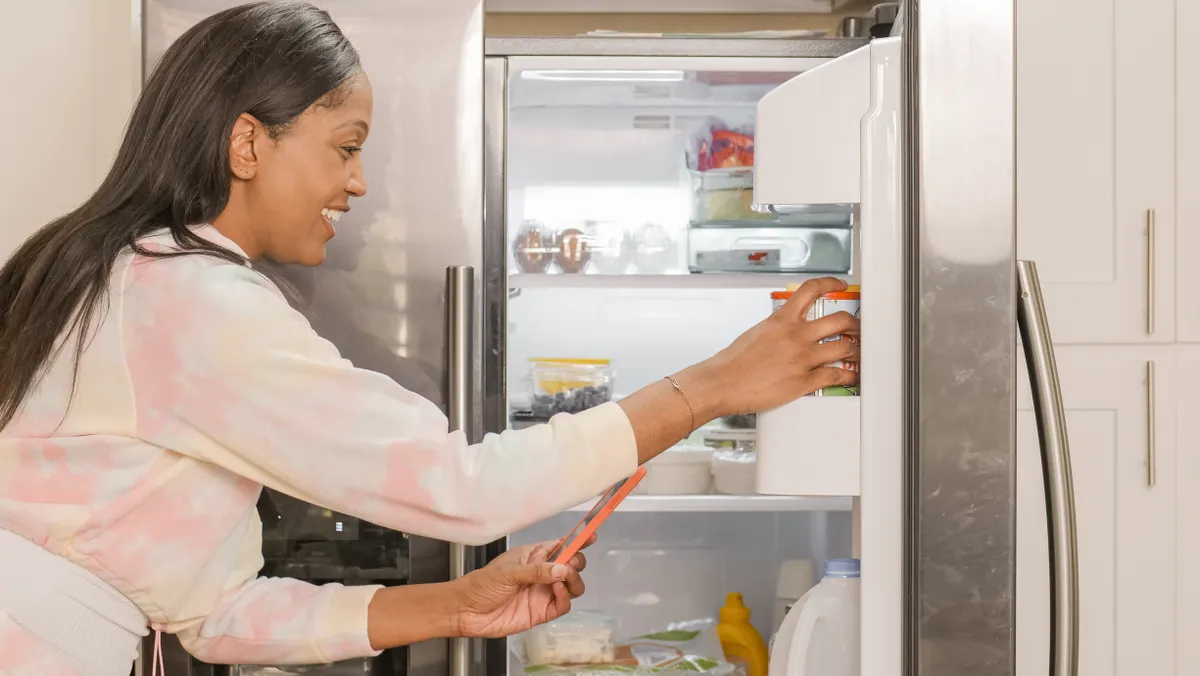
The Eat Me First fridge rule is gaining traction as a practical antidote to the age-old problem of forgotten leftovers and wilting produce. Popularised by Instagram creator LifeinJeneral, the system is straightforward: dedicate a clearly visible bin or zone in your fridge to anything that needs to be eaten before the rest of your food.
The principle sits somewhere between meal planning and instinct. At mealtimes, you check the bin first and build around whatever is in it, whether that is half a pack of spinach, a jar of harissa, or a condiment you opened two months ago and have barely touched. The aim is to use things up before they tip past their best, reducing waste and, over time, reducing the amount of money spent replacing food that quietly spoiled.
Why the Eat Me First fridge rule works
Robert Seixas, senior food director at Delish, put it plainly: ‘Most home fridges are a disaster as far as organisation. It’s just the way it is.’ The Eat Me First approach addresses that directly by giving perishable items a dedicated, unmissable home rather than leaving them to get buried behind taller containers.
Seixas also pointed to a longer-term benefit beyond simple waste reduction. ‘It’s a good learning exercise,’ he said. ‘It makes you learn about how long you can actually keep certain products.’ That knowledge compounds: once you know that ground meat or poultry needs to be used within one to two days, or that leftover cooked food is generally safe for three to four days, you shop and plan differently. Whole cuts of beef can be kept for three to five days in the fridge, but those timelines shift depending on how the food was stored and prepared.
For the most current guidance on storage times, the USDA publishes a refrigeration chart that covers a wide range of food types. Consulting it alongside the Eat Me First system closes the loop: knowing the timeline tells you when something should move into the bin, and the bin ensures you actually use it.
Getting the details right
Three practical considerations determine whether the system holds up over time. The first is bin placement. Seixas noted that the right location depends on the configuration of your fridge. There is no single correct answer, but the general principle is to choose a spot with enough vertical clearance for taller items and, above all, somewhere immediately visible when you open the door. A bin you have to move things to find defeats the purpose.
The second consideration is labelling. Anyone who has worked in a professional kitchen will know that unlabelled food tends to get discarded, because there is no reliable way to track dates mentally across a full fridge. The same logic applies at home. Writing the date on containers, whether with masking tape and a marker or pre-printed labels, means you know precisely when something needs to be eaten and when it needs to go.
The third, and arguably most important, consideration is cross-contamination. Seixas was direct on this point: ‘You don’t want to group raw meat with produce. You want a separate container.’ In practice, this means running two Eat Me First bins if your shopping regularly includes raw animal proteins. Keeping raw meat in its own designated space, separate from produce and cooked foods, is a basic food safety requirement that the system needs to respect to function safely.
A low-cost habit with a practical payoff
The Eat Me First fridge rule requires no specialist equipment and no significant outlay. A clear container, a labelling system, and a consistent habit of checking the bin before opening anything else are all it takes. The payoff is a fridge that generates less waste, a grocery bill that reflects what you actually eat, and, as Seixas and others have noted, a more creative approach to weeknight cooking, driven by what needs to be used rather than what you defaulted to buying.