


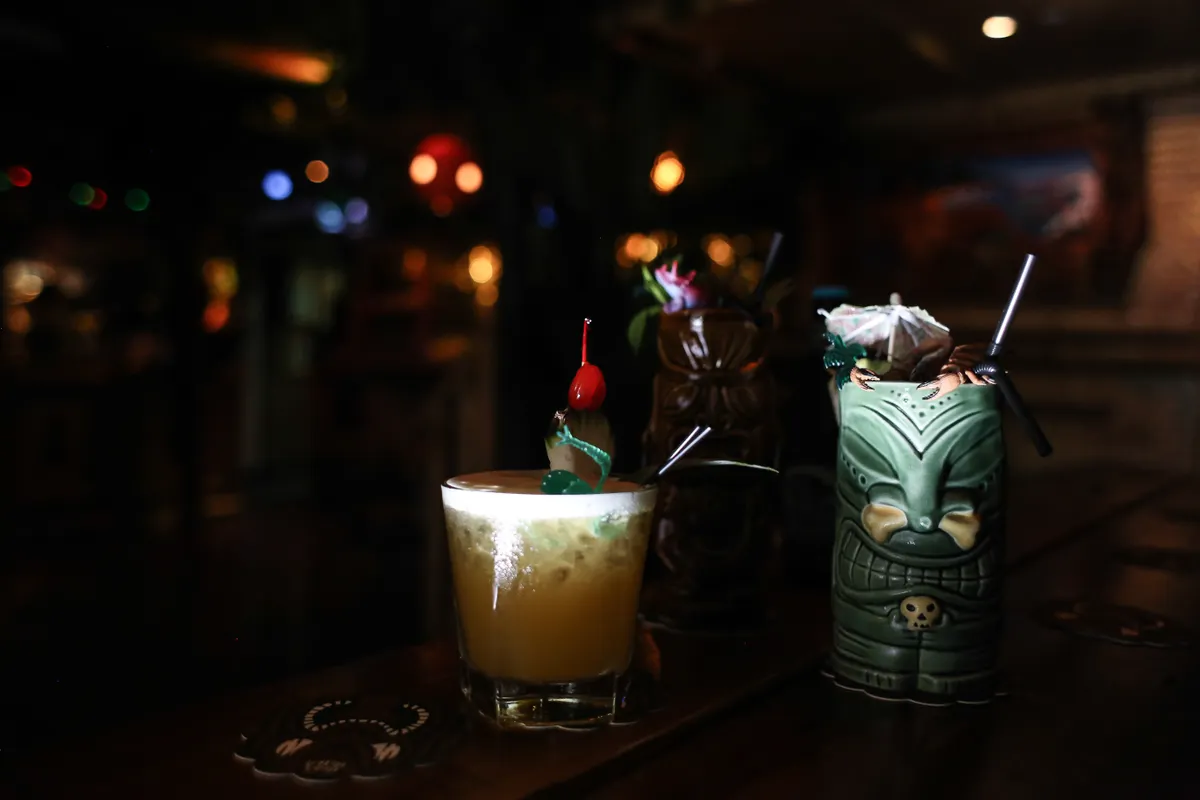
The Jungle Bird cocktail recipe has one of the more intriguing origin stories in modern mixology: born in a hotel bar in Kuala Lumpur in the 1970s and still going strong in tiki bars and beyond. The drink pairs aged Jamaican rum and pineapple juice with Campari, a combination that sounds unlikely but produces something genuinely refreshing.
According to Liquor.com, the cocktail was crafted by Jeffrey Ong at the Aviary Bar inside the Kuala Lumpur Hilton. That bar connection explains the name: the Jungle Bird is, in a sense, the house cocktail that outlived its original venue’s reputation, spreading through tiki culture over the decades that followed.
From Hotel Bar to Recipe Books: How the Jungle Bird Cocktail Recipe Spread
For years the drink circulated without wide documentation. Its first recipe-book appearance came in 1989, when it was included in The New American Bartender’s Guide by John J. Poister, according to Liquor.com. That gave the Jungle Bird a written record, but the cocktail’s broader revival among enthusiasts came later, when Jeff “Beachbum” Berry catalogued it in his book Intoxica, first published in 2002. Berry’s work on tiki history is widely credited with reintroducing a generation of drinkers to forgotten classics, and the Jungle Bird benefited from that renewed attention.
What sets it apart from most tiki drinks is the presence of Campari. The Italian liqueur is almost unheard of in the genre, where rum, fruit juice and sweeteners tend to dominate without any bitter counterweight. Here, it does two things: it deepens the colour and it sharpens the flavour, pulling the drink back from sweetness and giving it a dry, slightly bitter finish that makes a second sip feel earned. Visit Campari‘s own site for more on the liqueur’s flavour profile.
Ingredients and What Each One Does
The Jungle Bird cocktail recipe calls for five key components, and understanding the role of each makes the difference between a good version and a flat one.
Demerara syrup is the sweetener of choice here, made at a 1:1 ratio of demerara sugar to water, heated until dissolved and cooled before use. Standard simple syrup will work as a substitution, but it changes the character of the drink: demerara sugar carries a stronger molasses note that bridges the gap between the tart pineapple and lime on one side and the dark rum and bitter Campari on the other. If demerara is hard to source, turbinado sugar is an acceptable alternative.
For the rum, the recipe leans toward an aged Jamaican variety. Appleton Estate 12-Year-Old Rare Casks is one option that works well: the fruitiness and intensity in that particular rum complement the other flavours without being overwhelmed by the Campari. If you use Appleton Estate or another aged Jamaican rum you enjoy neat, you are already most of the way there.
Fresh pineapple juice gives the cleanest result, though any 100% pineapple juice will do the job. The same logic applies to the lime: fresh-squeezed only, and if the lime feels firm, roll it firmly on the counter before cutting to loosen the juice inside.
How to Build It
Method is straightforward. In a cocktail shaker, combine 2 oz. pineapple juice, 1½ oz. aged Jamaican rum, ¾ oz. Campari, ½ oz. fresh lime juice and ½ oz. demerara syrup. Fill the shaker with ice and shake hard until the outside of the shaker is thoroughly frosted, roughly 20 seconds. Strain into a rocks glass over ice cubes.
On ice quantity: it is worth filling the shaker fully rather than skimping. Less ice means the drink warms faster, which means faster dilution, which works against you. The goal is a cold, well-diluted pour that arrives in the glass already balanced.
Garnish with a wedge or quartered crown of fresh pineapple. The pineapple leaves, if you have them, add the visual element that earns the name. The demerara syrup recipe produces more than a single cocktail requires; the remainder keeps well and can replace simple syrup in other drinks, adding a darker, more molasses-forward note wherever you use it.
The Jungle Bird made its printed debut more than three decades ago, but the formula Jeffrey Ong put together in that Kuala Lumpur hotel bar remains unchanged, which is the clearest possible argument for making it exactly as written.