


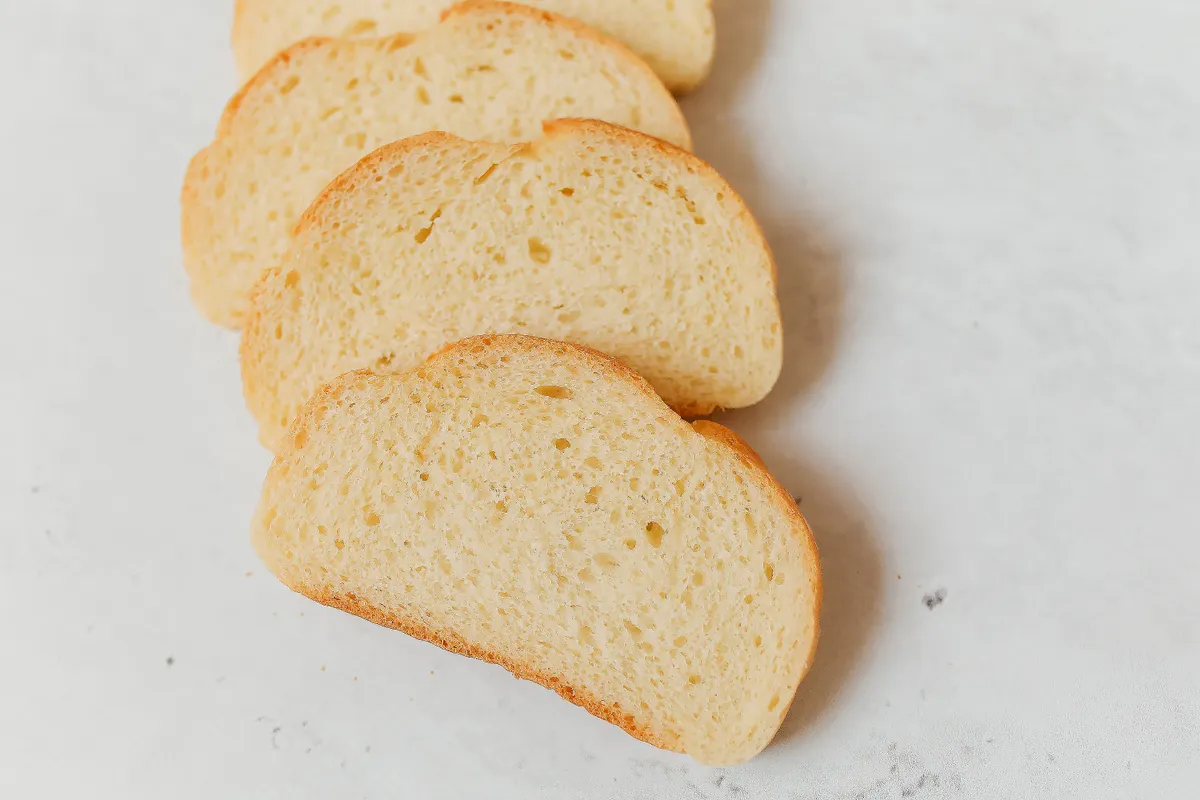
Ina Garten’s honey white bread is one of those recipes that answers a question she kept hearing: where do you actually find good white bread? The answer, it turns out, is that you bake it yourself, and the method is more straightforward than most home bakers expect.
The recipe is reprinted from Barefoot Contessa at Home, first published in 2006, with photographs by Quentin Bacon. The book was Penguin Random House title published through the Clarkson Potter imprint. Garten notes in her introduction that many people who follow her recipes have written to say they struggle to source what she calls ‘good white bread’, and that this loaf was developed as her solution to that problem.
A Two-Loaf Yield Designed for the Freezer
The recipe produces two loaves, and that is by design. Garten is straightforward about the logic: one loaf for now, one for the freezer. Total time from start to finish runs to 3 hours 45 minutes, with the bulk of that accounted for by two separate rises of roughly one hour each. Active preparation is only around 10 minutes, which makes the overall commitment far lighter than the total time suggests.
Each serving carries 1,663 calories. With two loaves yielded and a generous calorie count per serving, this is a bread built for sharing or storing rather than sitting on the worktop for a single household to work through in a day.
Ingredients and the Method Behind Ina Garten Honey White Bread
The ingredient list is compact but specific. You will need half a cup of warm water at 110°F, two packets of dry yeast (each a quarter of an ounce), one teaspoon of sugar, one and a half cups of warm whole milk (again at 110°F), six tablespoons of unsalted butter (melted and cooled, plus a little extra softened for greasing), one and a half tablespoons of honey, two extra-large egg yolks, one tablespoon of kosher salt, and around five cups (600g) of all-purpose flour, with extra kept to hand for dusting. A single extra-large egg white, lightly beaten, is used to brush the tops before baking.
The process starts in a stand mixer fitted with a dough hook. The yeast and sugar dissolve in the warm water for five minutes before the milk, butter, and honey go in. Egg yolks, salt, and three cups of flour follow, mixed on low for around five minutes. The remaining two cups of flour are added with the mixer still on low, and the speed is then raised to medium. Flour is added gradually from that point until the dough stops sticking to the bowl, Garten’s instruction here is worth following precisely: add it slowly, because you cannot take it back out. Mixing on medium continues for around eight minutes.
After a short knead by hand on a floured surface until the dough is smooth and elastic, it goes into a buttered bowl, covered with a damp towel, for its first hour-long rise. Once doubled, the dough is divided in half, shaped, and placed into two greased 9-inch by 5-inch loaf tins for a second rise of roughly another hour.
Baking and Finishing
The oven is set to 350°F with the rack positioned at the centre. Tops are brushed with the beaten egg white before the tins go in. Baking time is 40 to 45 minutes, with the standard tap-test used to judge doneness: the loaves should sound hollow. Once out of the tins, they cool completely on wire racks before slicing.
The full recipe, along with the rest of the collection, is available via Delish, where it is published with permission from Clarkson Potter.