


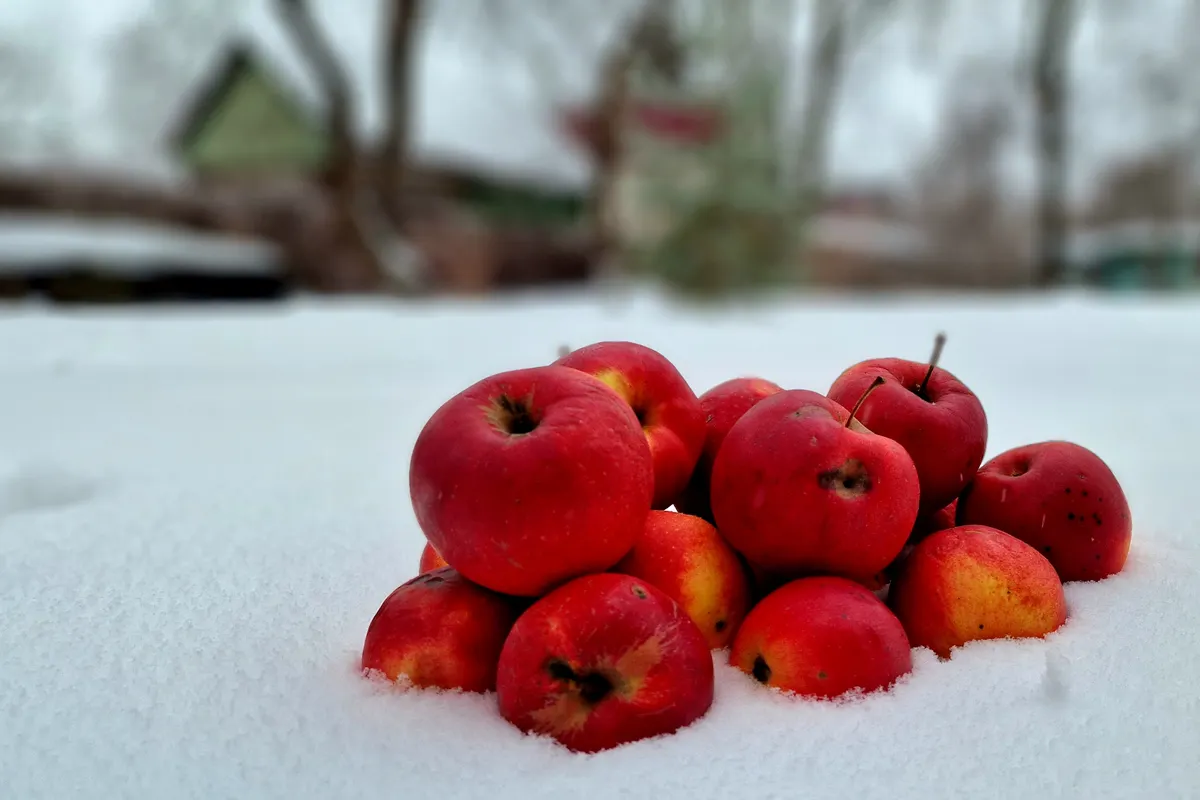
The US apple crop spring frost that swept through several growing regions this past season has left orchards from Virginia to Pennsylvania facing losses that growers are calling among the worst in living memory. The nationwide harvest is expected to come in roughly seven per cent smaller than in 2025 and three per cent below the five-year average, according to David Bedford, a senior research fellow at the University of Minnesota‘s College of Food, Agriculture, and Natural Resource Sciences.
Bedford explains that spring frosts occur when below-freezing temperatures arrive near or during the apple bloom period. The fruit itself is not the vulnerability, it is the blossom. ‘Temperatures below 32 degrees may cause damage to the blossoms and the associated reproductive parts,’ he says. ‘If those parts are damaged, they are not able to produce viable fruit, which then impacts the total amount of fruit produced.’ Exactly when a tree blooms depends on variety, growing region, and the weather pattern leading into spring, meaning the window of risk shifts from one year to the next.
Bedford notes that warmer winters and early springs are pushing bloom dates forward across the country, leaving flowers exposed if temperatures plunge late in the season, precisely the sequence that unfolded this year.
Which States Were Hardest Hit by the US Apple Crop Spring Frost
The US Department of Agriculture identified 13 states, many in the Mid-Atlantic, as having sustained catastrophic crop damage following the spring weather event. Some parts of Virginia saw a complete loss of Pink Lady and Honeycrisp blooms. Axios reported that several Pennsylvania orchards cancelled their apple-picking seasons after what growers described as one of the most destructive freezes in generations. State officials in New York expect farmers there to suffer more than $30 million in losses.
The scale of damage in Pennsylvania has been quantified in detail by Penn State University, whose researchers estimated apple losses in the state at between 70 and 90 per cent. The picture is bleaker still for other stone fruit: peaches, nectarines and apricots saw losses ranging from 90 to 100 per cent, European pears from 60 to 80 per cent, and cherries and plums as high as 95 to 100 per cent. Those figures underline that this freeze was not solely an apple story, it was a broad fruit-crop catastrophe across the Mid-Atlantic.
Bedford says Minnesota also experienced a ‘substantial’ spring frost affecting its apple crop, something he notes happens only about once every 15 years. Growers from New Jersey to Wisconsin have reported losses of varying severity, though the most extreme damage was concentrated along the East Coast.
Federal Relief and What Comes Next for Growers
In response to the scale of the damage, the USDA Risk Management Agency has authorised emergency relief measures and streamlined crop insurance processes for apple growers in Maryland, Michigan, New York, Pennsylvania, Virginia and West Virginia. The move is designed to accelerate financial support for producers recovering from what the agency characterises as a catastrophic late-April freeze.
For individual growers, the consequences are immediate and severe. Orchards that have cancelled pick-your-own seasons lose not just fruit revenue but the agritourism income that is often central to their business model in autumn.
What the US Apple Crop Spring Frost Means for Consumers
For shoppers, the picture is less acute. Bedford points out that the worst losses were geographically concentrated, and production elsewhere can absorb some of the shortfall. The apple industry also relies on controlled-atmosphere storage, which allows fruit harvested earlier in the season to remain fresh for months before it reaches supermarket shelves. ‘If the spring freezes are widespread, it can cause a reduction in total volume of the apple crop, which can cause a slight increase in consumer prices,’ Bedford explains, but he frames this year’s situation as a regional rather than national supply crisis.
Pick-your-own visitors in Virginia, Pennsylvania and neighbouring states will find options reduced or, in some cases, absent entirely this autumn. The USDA’s crop insurance flexibility measures are expected to be among the first concrete steps towards helping affected growers manage the financial fallout while they look ahead to next season’s planting and pruning decisions.