


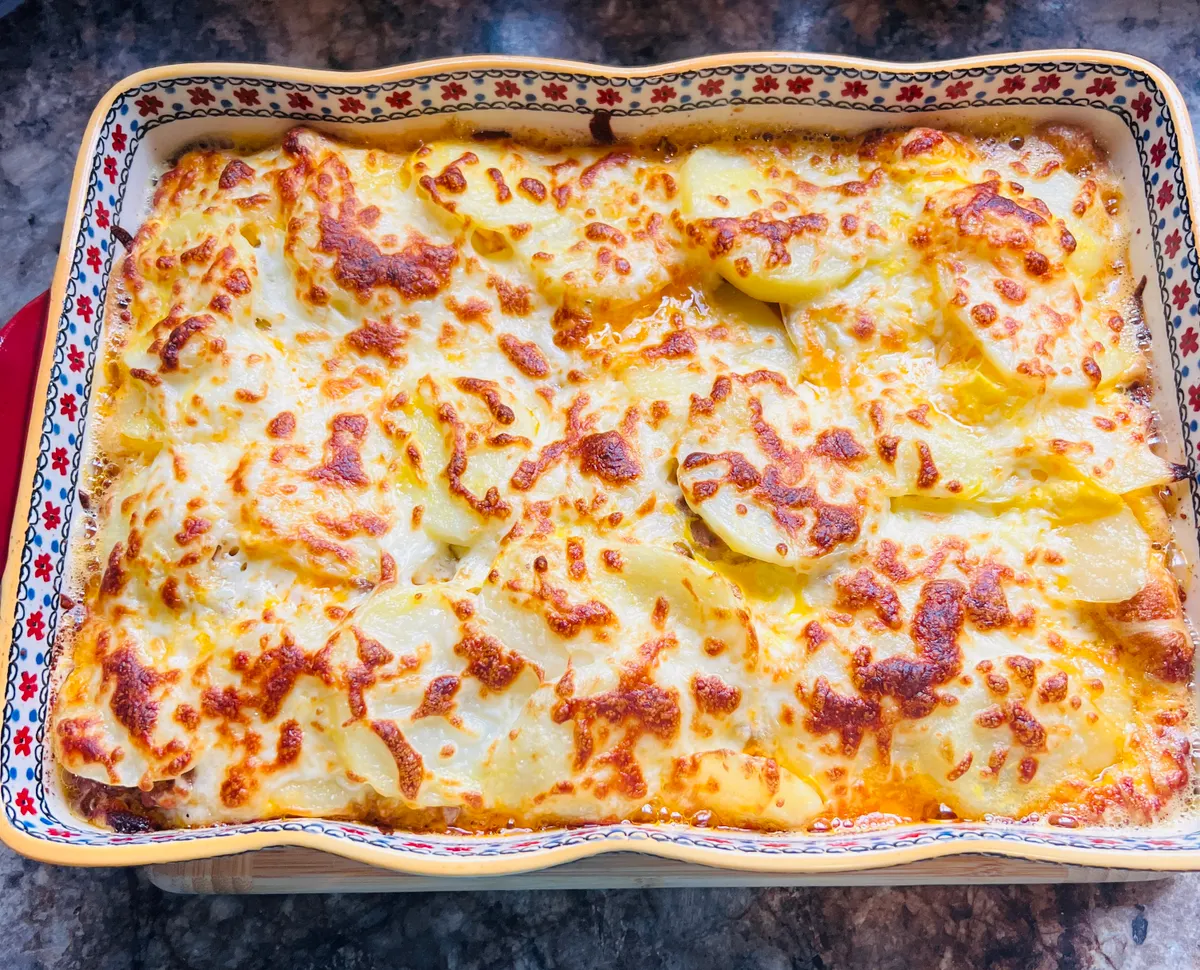
This tuna noodle casserole recipe carries more history than most weeknight dinners are entitled to. At 593 calories per serving, it is built around canned tuna, egg noodles, a from-scratch creamy sauce, and a buttery Ritz cracker topping that browns in the oven over 20 to 25 minutes at 400°.
The dish has become one of those reliable weeknight staples that people tend to cycle back to without quite knowing why. The short answer is probably that it works: the combination of flaky tuna, springy noodles, and a sauce thick enough to coat everything properly is hard to argue with.
A Tuna Noodle Casserole Recipe With Deeper Roots Than the 1950s
Canned tuna and cream of mushroom soup made the dish a staple of American comfort food in the 1950s, but the origins run further back. According to TASTE, the first printed recipe for tuna casserole, titled ‘Noodles and Tuna Fish en Casserole,’ appeared in Sunset Magazine in 1930, submitted by a reader identified only as Mrs. W. F. S. of Kennewick, Washington.
Even that 1930 recipe had predecessors. Chowhound points to cod à la béchamel, which dates back to at least the 1840s, as an earlier version of the same idea: flaked white fish folded into a creamy sauce. The structural logic of the dish has barely changed in two centuries.
By the late 1950s, the casserole was genuinely ubiquitous. A 1959 survey by the U.S. Bureau of Commercial Fisheries, cited by Quaint Cooking, found that 8 out of 10 households served canned tuna at least once a week, with tuna casseroles ranking in the top three preparations.
What This Version Does Differently
The recipe here drops the can of cream of mushroom soup and rebuilds the sauce from scratch. Butter, flour, whole milk, cream cheese, and chicken bouillon paste form the base, with 8 oz of button or cremini mushrooms and fresh thyme carrying the earthy flavour that the canned soup was always approximating. Garlic powder is used in place of fresh garlic, which can become muted inside a creamy sauce during baking.
Cream cheese is the ingredient doing the most structural work. Beyond flavour, it acts as a stabiliser that prevents the sauce from splitting, which matters when the dish goes into a hot oven for the best part of half an hour.
The noodles are 12 oz of wide or extra-wide egg noodles, cooked to al dente and no further: they will continue cooking in the oven, and overcooking them at the stove stage produces a soft, compacted texture once baked. Elbows, cavatappi, shells or rotini are workable substitutes if that is what is available.
Frozen peas go in straight from the freezer, no thawing required. One cup of frozen peas will be cooked through by the time the casserole comes out of the oven. 8 oz of sharp cheddar, freshly grated, is split across the filling and the top layer. Pre-shredded cheddar is coated with anti-caking agents that interfere with melting, so grating it fresh matters here.
The topping is a full sleeve of Ritz crackers, crushed by hand and scattered over the cheddar before baking. It browns at 400° in the same 20 to 25 minutes that the filling takes to bubble through.
Assembly uses a 13″ x 9″ baking dish, and the whole thing comes together in a single large pot: noodles first, sauce in the same pot afterwards, then everything combined before transferring to the dish. Leftovers keep in an airtight container in the fridge for up to three days.
The prep time is listed at 20 minutes, with a total time of 55 minutes. For anyone working ahead, the recipe suggests preheating the oven and getting the water boiling before starting prep, which eliminates dead time between the noodle and sauce stages.