


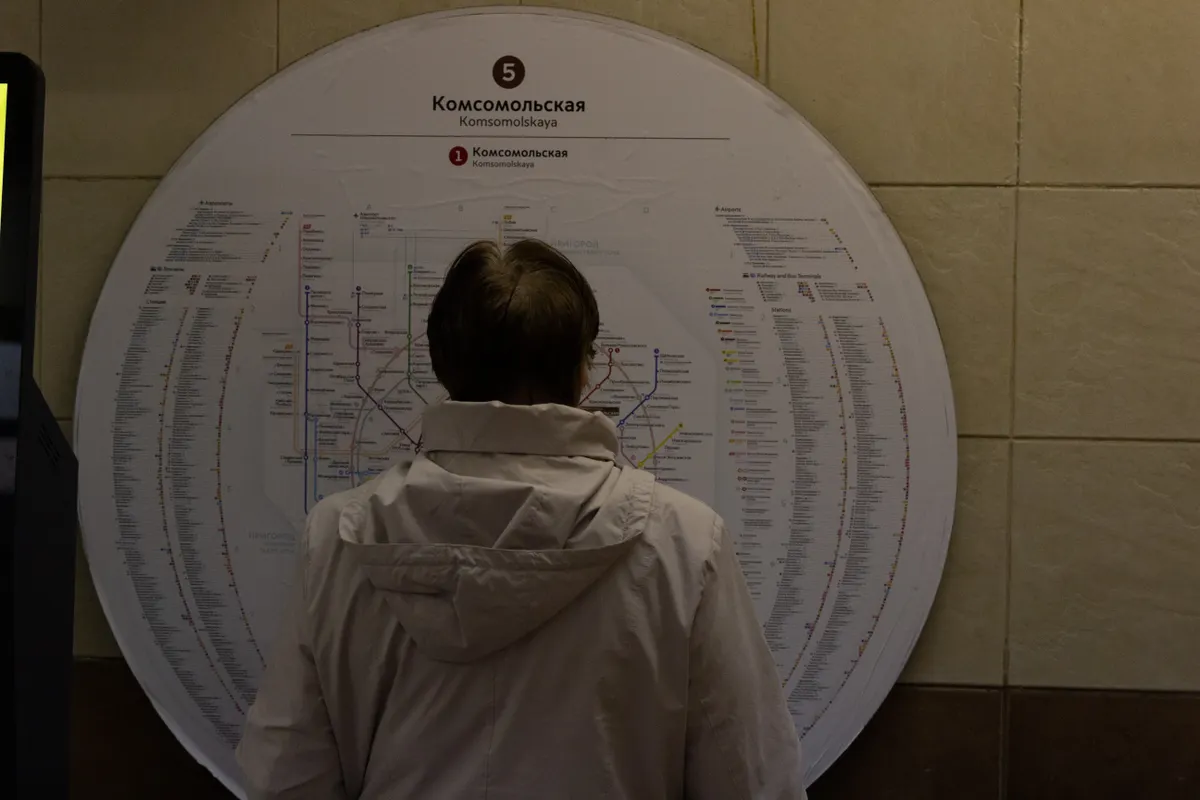
Every group of friends has a navigation friend, the person quietly steering the evening from dinner reservation to the right subway exit while everyone else enjoys the ride. The role is so well-defined that psychologists have given it a name, and two experts in friendship dynamics say it carries a weight that is almost never properly acknowledged.
What the Navigation Friend Group Role Actually Involves
The navigation friend is not simply whoever owns the loudest voice or the best sense of direction. According to therapist Barbie Atkinson, LPC-S, they are ‘not necessarily a person who is controlling.’ The job is subtler than that. Atkinson describes the navigation friend as ‘someone who’s already thinking ahead,’ someone who ‘can take chaos and bring structure to it.’
In practice, that forward-thinking covers a spectrum of logistical detail that goes well beyond opening Google Maps. It means checking whether a restaurant has parking before six people pile into the same car. It means knowing which entrance the concert venue uses and whether the security queue runs slow. It means watching the stop count on the underground while the rest of the group is deep in conversation. Psychologist Christie Ferrari, PsyD, puts it plainly: ‘They’re running the mental map of where everyone’s going and how they’re getting there, while everyone else gets to be a passenger.’
When the navigator does the job well, Ferrari says, the people following along ‘tend to forget there was a job to do in the first place.’ That invisibility is precisely the problem.
The Hidden Cost of Carrying the Navigation Friend Role
For the navigator, a successful evening out is not a relaxed one. While others are catching up on gossip or pausing to look in a shop window, the navigation friend is running a quiet checklist: Is this the right entrance? Did we miss a turn? Are we going to be late? Do we need to walk faster?
Individually, each of those micro-responsibilities sounds trivial. Collectively, they represent a sustained mental effort that never fully switches off. Atkinson puts the dynamic bluntly: ‘Competence attracts more responsibility.’ Once a person proves reliable at this kind of task, the expectation calcifies. Over time, both Atkinson and Ferrari say, that expectation can breed resentment and burnout.
That pattern extends well beyond friend groups. The University of Wisconsin–Madison College of Letters & Science reports that cognitive labour frequently fails to be acknowledged in relationships of all kinds. Allison Daminger, an Assistant Professor of Sociology at Wisconsin, studies how an imbalance in cognitive labour (the planning, organisation and follow-through that keeps shared life running) often falls unfairly on one person. Daminger’s work focuses on couples, but the structural pattern she identifies maps directly onto what Ferrari and Atkinson describe in friendship circles: the person doing the invisible work rarely receives recognition proportionate to the effort involved.
Ferrari frames the cost from the navigator’s perspective: while friends enjoy the freedom to connect without logistical anxiety, the nav friend is denied that same ease. ‘That allows you to really free up your time and your mental capacity to connect better with everyone else because you’re not worried about anything,’ Ferrari says of those who benefit. The navigator, by definition, is always worried about something.
How to Actually Show Appreciation
The easiest starting point is acknowledgement. Ferrari says that ‘invisible labor is one of those things that does go unnoticed,’ and that consciously naming it makes a difference. Thank the navigation friend when a plan runs smoothly. Notice the effort, not just the outcome.
Beyond gratitude, Atkinson’s advice is more direct: ‘Take over the task without having to be asked.’ Book the dinner reservation yourself. Research the parking before the group WhatsApp erupts with questions. Be the one to pull up the route and say, with some confidence, that you know the way.
The principle is straightforward: a good night out rarely just happens. Someone is absorbing the logistical load so everyone else does not have to. If it has never once been you, that is worth reflecting on. And the next time your navigation friend steers the group through a seamless evening, let them be, for once, the one who is not thinking about a single thing except the conversation in front of them.