


Some clubs become important because they arrive at the right moment. Others become important because they help create the moment that everyone else eventually enters.
Arsenal Women belong in the second category.
The team was founded in 1987, long before the Women’s Super League, before full-time professionalism became standard at the top of the English game, and before major women’s matches routinely filled the country’s biggest stadiums. Arsenal built a winning culture while the structure surrounding women’s football was still being built around them.
That history is why Arsenal’s place in the modern game cannot be measured only by trophies. The club connects several distinct eras: the late-1980s growth of organized women’s football, the domestic dominance of the 1990s and 2000s, the historic European triumph of 2007, the launch of the WSL in 2011, the emergence of new rivals, the move toward major-stadium crowds and, finally, a return to the top of Europe in 2025.
Across nearly four decades, the scale of women’s football changed dramatically. Arsenal changed with it without losing the expectation that had defined the team from the beginning: compete for everything.
1987: Vic Akers Builds the Foundation
Arsenal Women were founded in 1987 by Vic Akers, a figure whose influence reaches far beyond the club’s trophy cabinet.
At the time, women’s football in England operated in a completely different environment from the one supporters know today. The resources were smaller, media attention was limited and the idea of a fully professional national league was still years away.
Akers nevertheless built Arsenal with the mentality of an elite sporting organization. Standards mattered. Recruitment mattered. Continuity mattered. Winning mattered.
That approach gave the team an identity before women’s football had the commercial infrastructure that would later make club identities easier to build. Arsenal did not wait for the wider sport to become powerful before deciding that its women’s side should behave like a powerful team.
The result was a foundation strong enough to survive enormous changes in the game around it.
The First Trophies Turn a Team Into a Standard
Successful teams eventually reach a point where a trophy is no longer treated as a surprise. It becomes an expectation.
Arsenal reached that point early.
Through the 1990s and into the 2000s, the women’s side accumulated domestic honours and became one of the defining powers of English football. League titles and cup victories did more than fill the record book. They created a reputation that affected every match Arsenal played.
Opponents knew what beating Arsenal meant. Players joining the club knew what was expected. Supporters learned to associate the badge with a women’s team that expected to finish seasons holding silverware.
That kind of repeated success is one of the most important forms of sports branding. A club can design a crest, launch a campaign or unveil a new kit. It cannot manufacture decades of expectation. That has to be earned.
A Women’s Team Becomes Part of the Arsenal Story
The significance of Arsenal Women also rests in the way the team gradually became woven into the wider identity of the club.
The men’s side had more than a century of history behind it, from Woolwich and Highbury to league titles, cup runs and generations of famous players. The women’s team entered that existing institution and began adding a history of its own.
The wider Arsenal FC history stretches back to 1886, but the women’s side has become an increasingly important part of what the Arsenal name means to modern supporters. Its trophies, captains, rivalries and European nights now belong to the club’s historical identity rather than sitting outside it.
That distinction matters. The strongest women’s teams are not simply women’s versions of famous men’s clubs. Over time they develop their own legends, their own painful defeats and their own moments that supporters recognize instantly.
Arsenal Women built enough of those moments to become an institution in their own right.
2007: The Season That Put Arsenal on Top of Europe
The defining achievement of the original Arsenal era came in the 2006-07 season.
Arsenal were already dominant domestically, but Europe offered a different test. The UEFA Women’s Cup brought together leading clubs from across the continent, and no English side had won it.
Arsenal changed that.
In the final against Swedish powerhouse Umeå, Alex Scott scored the only goal of the two-legged tie. Arsenal won 1-0 on aggregate and became the first English club to conquer Europe in the women’s game.
The European trophy completed an extraordinary season in which Arsenal swept the available major honours. It was the type of campaign that permanently changes how a team is remembered.
Domestic dominance can sometimes be explained away by the strength of a particular league or era. European success travels differently. It tells the rest of the sport that a club’s standards hold up beyond its own borders.
For Arsenal, 2007 became a reference point that would remain unmatched in English women’s club football for years.
Why the 2007 Title Grew More Important With Time
Some trophies become more impressive as the sport around them grows.
Arsenal’s first European title did exactly that.
Women’s club football across Europe became increasingly sophisticated during the years that followed. Investment increased. Recruitment became more international. Clubs such as Lyon and later Barcelona built dynasties with deep squads, world-class facilities and enormous expectations.
The competition itself evolved from the UEFA Women’s Cup into the UEFA Women’s Champions League.
As winning Europe became harder, Arsenal’s 2007 achievement looked less like an isolated trophy and more like one of the landmark accomplishments in English women’s football history.
The strange part was what came next: the club that had reached the summit would have to wait 18 years to return.
2011: Arsenal Wins the First Women’s Super League
The next major structural change arrived in 2011 with the launch of the FA Women’s Super League.
The inaugural WSL began with eight clubs and represented a new attempt to give elite women’s football in England a stronger, more visible national competition.
Arsenal immediately gave the new league a familiar winner.
Laura Harvey’s side claimed the first WSL title after a close race with Birmingham City. It was another trophy for Arsenal, but historically it meant something more: the club became the first champion of the league that would eventually grow into the centre of professional women’s club football in England.
The early WSL was still far removed from the modern product. It began as a semi-professional competition and would undergo changes in scheduling, structure, sponsorship and standards.
Arsenal’s presence created continuity between the game that existed before the WSL and the increasingly professional era that followed.
Dominance Gives Way to Rivalry
The growth of the WSL also created a challenge Arsenal had not always faced domestically: more clubs were becoming capable of matching their ambition.
Chelsea developed into a dominant force. Manchester City invested heavily. Other clubs improved recruitment, coaching, facilities and player development.
For Arsenal, this changed the meaning of success.
A historic reputation no longer guaranteed control of the league. The club had to adapt to a competition in which rivals possessed deeper resources and increasingly international squads.
That pressure strengthened the league. It also gave Arsenal new rivalries and new emotional stakes.
Dominance gives a sport a benchmark. Rivalry gives it drama.
By the late 2010s and early 2020s, Arsenal-Chelsea fixtures had become some of the most important dates on the domestic women’s football calendar. North London derbies carried their own energy. European qualification could turn individual league matches into season-defining events.
The environment had become harder. It had also become bigger.
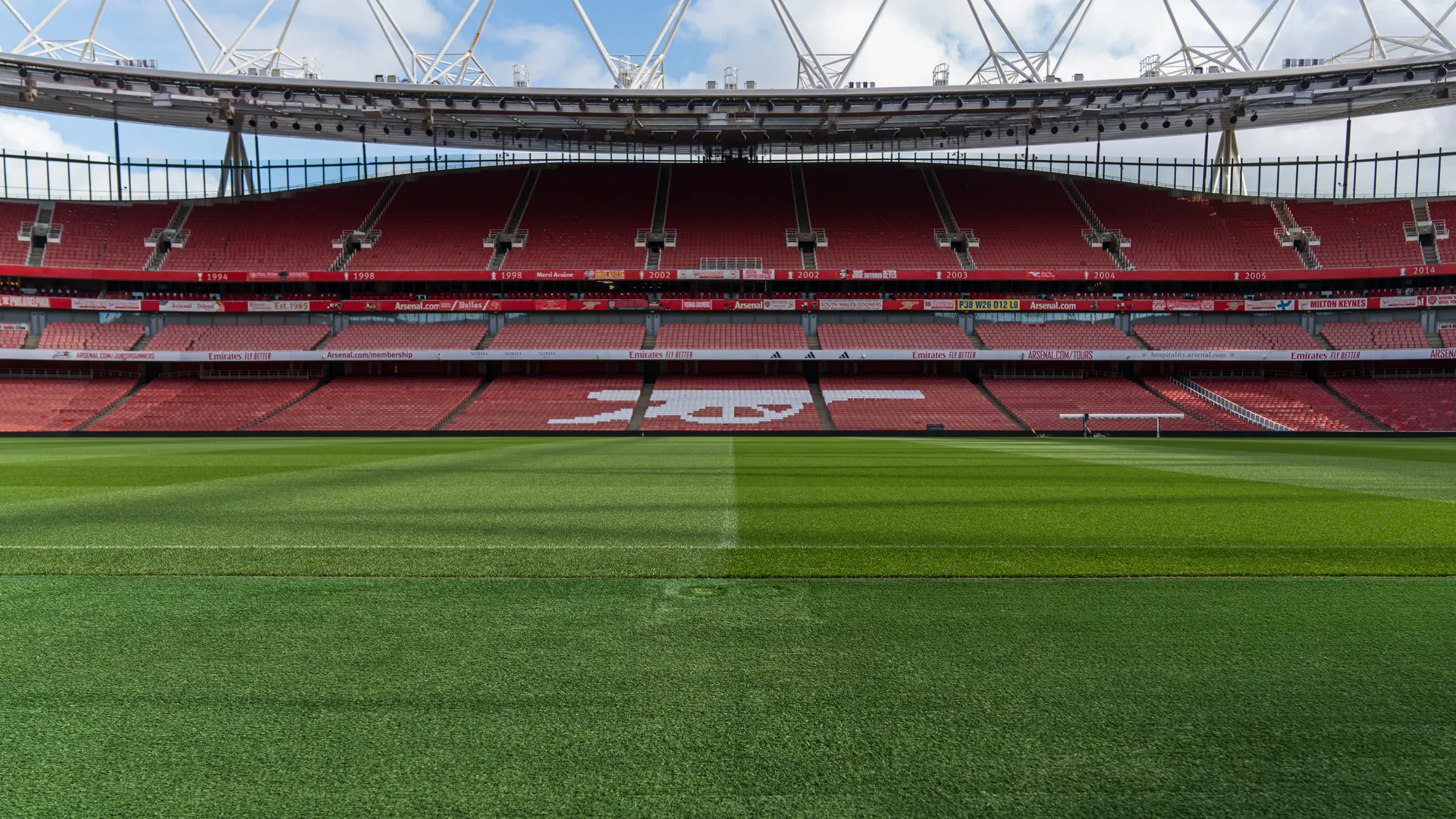
The Emirates Changes What an Arsenal Women Match Looks Like
One of the clearest symbols of that growth has been the increasing use of Emirates Stadium for Arsenal Women fixtures.
For generations, even elite women footballers often played in venues dramatically smaller than those associated with major men’s clubs. That was partly practical, but it also shaped how the sport looked to the public.
Stadiums communicate importance before a ball is kicked.
When Arsenal Women play in the club’s main stadium, surrounded by tens of thousands of supporters wearing the same crest, the visual message is difficult to miss. The women’s team is not borrowing Arsenal’s identity for the afternoon. It is occupying the centre of it.
The shift eventually became structural. Arsenal announced that Emirates Stadium would serve as the main home of the women’s team, with all WSL home matches there in 2025-26.
That would have been difficult to imagine when the team was founded in 1987. It is now part of the normal growth of the club.
Players Give Every Era a Face
Team history is usually organized around seasons and trophies, but supporters remember eras through players.
Arsenal have had generations of them.
The 2007 champions included figures whose names remain connected to one of the greatest English club seasons in the women’s game. Later teams produced and attracted stars who carried Arsenal into the WSL era and beyond.
Kim Little became one of the defining midfielders of the modern club. Leah Williamson progressed through Arsenal’s system and became an England captain. Beth Mead became one of the best-known players in the country. Vivianne Miedema produced goals at a rate that made her one of the most feared forwards in the league.
Different supporters attach themselves to different generations, but that is exactly what a long history creates. A child who discovered Arsenal Women in 2025 does not have the same memories as someone who followed the side in 2007. Both can still feel ownership of the same story.
2024-25: A European Run Built on Comebacks
By the 2024-25 season, Arsenal’s first European title belonged to another age of the sport.
The route back to a final was anything but straightforward.
Arsenal entered the competition early and had to navigate a long campaign. In the knockout rounds, they repeatedly found themselves needing to overturn deficits.
Real Madrid won the first leg of the quarter-final 2-0. Arsenal responded with a 3-0 victory in the return match.
Lyon then won the first leg of the semi-final 2-1 in London. Arsenal travelled to France and produced one of the biggest performances in the club’s modern history, winning 4-1 to advance 5-3 on aggregate.
The pattern gave the campaign a distinctive identity. Arsenal did not reach the final by gliding through every round. They reached it by repeatedly refusing to let a bad first leg become the end of the story.
2025: Barcelona, Lisbon and the Second European Crown
The final took place in Lisbon on 24 May 2025.
Waiting for Arsenal was Barcelona, the reigning European champion and one of the defining teams of the modern women’s game.
The contrast made the match feel almost symbolic.
Arsenal carried the history of 2007. Barcelona represented the standard the rest of Europe had been chasing in the new era.
The final remained scoreless deep into the second half before substitute Stina Blackstenius received a pass from Beth Mead and finished the chance that changed Arsenal history.
Arsenal won 1-0.
Eighteen years after becoming European champions for the first time, they had done it again.
The scoreline even echoed the first triumph. Arsenal had beaten Umeå 1-0 on aggregate in 2007. Now another 1-0 victory delivered the club’s second continental crown.
Two European Titles From Two Different Worlds
The 18-year distance between Arsenal’s European championships is what makes the pair so revealing.
The first came before the WSL existed. The second came in a mature professional era with major broadcast deals, global recruitment, packed stadiums and players who had become international celebrities.
The game surrounding Arsenal was almost unrecognizable.
Yet both teams were chasing the same basic thing: the right to call themselves the best in Europe.
That gives Arsenal a historical position few English clubs can match. The club did not merely enter women’s football after its commercial rise. It helped build the pre-professional era, survived the transition and then proved it could still win at the highest level once the sport had transformed around it.
What Arsenal’s Evolution Says About Women’s Football
Arsenal Women’s history works as a timeline of the wider English game because so many of the sport’s changes are visible inside the club.
The team began when women’s football had little mainstream visibility.
It became dominant before there was a WSL.
It won Europe before English women’s football was fully professional.
It became an inaugural WSL champion as the domestic structure changed.
It faced stronger rivals as investment spread across the league.
It moved major matches into Emirates Stadium as women’s football attracted larger audiences.
And it returned to the top of Europe in an era when the competition was deeper and more global than the one it had conquered in 2007.
That is not simply a list of milestones. It is the story of a sport expanding around a club that had been there for much of the journey.
Final Thoughts
Arsenal Women have spent nearly four decades building a history that now stretches across several versions of the women’s game.
Vic Akers founded the team in 1987. Arsenal became a domestic force. The 2007 side conquered Europe. The club won the first WSL title in 2011. New rivals made the league stronger. Emirates Stadium became an increasingly important home. Then the 2025 team defeated Barcelona and returned Arsenal to the European summit after an 18-year wait.
Those moments belong to different generations, but together they explain why Arsenal are more than one successful women’s team among many.
They are one of the institutions through which the history of English women’s club football can be traced.
The trophies matter because they mark the moments. The larger achievement is that Arsenal remained relevant while the entire scale of the sport changed around them.
For more stories about the teams, championship eras, sporting identities and moments that shaped the way fans remember sport, visit Sports History Group.