


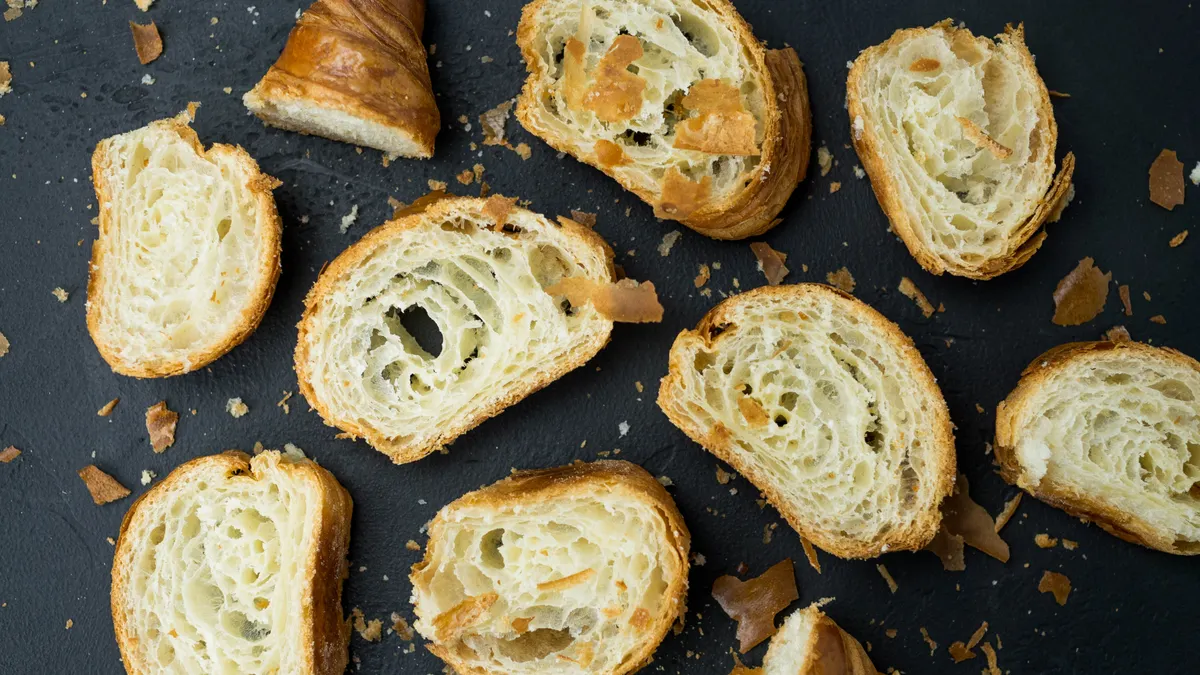
Reviving stale bread at home is simpler than most people assume, and the technique comes down to water and a hot oven. Run the entire loaf under a tap until it is thoroughly wet but not falling apart, place it directly on an oven rack, and bake at 400°F for between five and ten minutes.
The science behind the staleness is worth understanding. Bread loses its texture through a process called starch retrogradation: the starch molecules inside the loaf change shape and recrystallise, while moisture migrates into the crust or evaporates altogether. The result is the stiffer, drier loaf that ends up sitting unloved on the counter. What the water-and-oven method does is reverse that process by generating steam inside the bread as it heats, rehydrating those starch molecules and restoring the soft crumb.
How to Revive Stale Bread at Home Without Ruining It
According to Makinze Gore, Delish Senior Food Editor, the key is getting the loaf properly wet without overdoing it. ‘Overdoing it would be soaking it for so long it’s falling apart,’ she says. Once the bread is wet, it goes straight onto the oven rack rather than a baking tray. ‘The water will keep it from just toasting the bread and keep the loaf from burning,’ Gore explains. ‘The steam adds moisture back into [the bread] and makes it soft again.’
Placing the loaf directly on the rack, Gore says, ‘keeps anything from getting soggy.’ A baking sheet is a workable second option, though she advises against wrapping the bread in foil. ‘I usually skip wrapping it in foil because the crust will never get crispy that way,’ she adds.
One firm limit: do not repeat the process on the same loaf. ‘I only recommend reviving it once. After that it’s a goner,’ Gore says.
Safety, Mould Risk and Which Breads Respond Best
The method is generally safe, but it introduces a risk that is worth taking seriously. Food safety expert and author of Healthy Living, High-Protein Cookbook, Toby Amidor M.S., R.D., notes that while heating improves the quality of the bread by adding moisture, mould also thrives in moisture. That means a revived loaf can spoil more quickly than one left untreated. Her advice: ‘You should only toast [or reheat] the amount of bread you need at that meal or snack occasion.’ Do not store the bread after using the water method.
The technique performs best on crusty loaves, sourdough being the prime example. Soft white bread is more likely to toast in the oven heat rather than steam through properly. Whole loaves respond better than individual slices, though a single slice is not beyond saving. Gore recommends wetting it ‘a little heavier than a sprinkle’ and dropping the oven temperature. ‘I’d do closer to 300°F for 5-ish minutes,’ she says.
The microwave, meanwhile, is not the answer. Gore is direct on this: ‘I’ve done it in the microwave before and find it just doesn’t work as well. I’ve tried putting water on it and wrapping it in a wet paper towel. Both ways usually end up making the bread tougher instead of softer.’
When to Admit the Loaf Is Past Saving
There is a point beyond which no method helps. If the bread shows mould, the decision is straightforward: bin it. Gore’s other marker is equally clear: if the loaf has gone so hard that, as she puts it, ‘you feel like you could hammer a nail into the wall with it,’ no amount of steam will bring it back. At that stage, the only sensible move is a fresh loaf. The water-and-oven method is a genuine fix for bread that has dried out in the normal course of a day or two, not a restoration service for bread that has been forgotten for a week.