


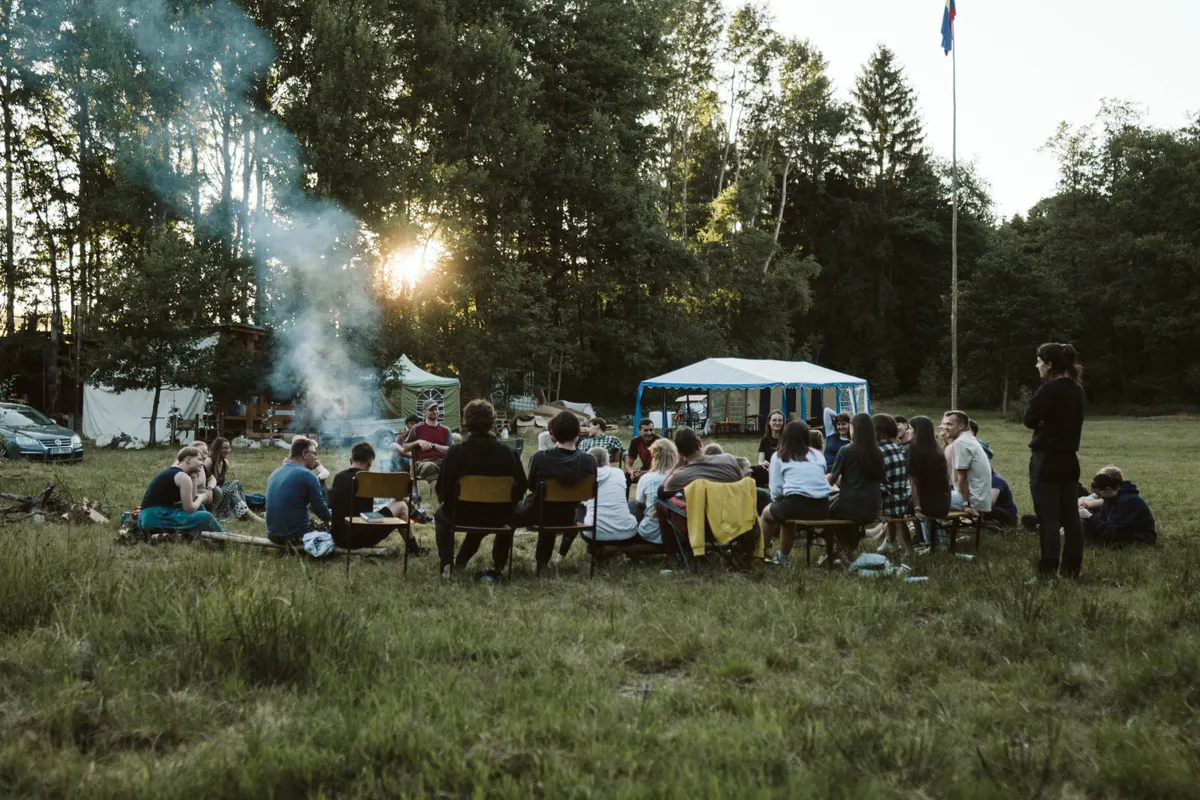
Maintaining a village in adulthood, it turns out, is a different challenge from finding one in the first place. The desire for tight-knit community has become a fixture of online conversation, yet the harder, quieter question, what it actually costs to sustain those bonds across careers, moves, marriages, grief and the ordinary accumulation of busy lives, is the one that tends to go unanswered.
Wellness journalist and community builder Yasmine Jameelah, founder of Transparent Black Girl, set out to answer it. She spoke with three women at very different points in adult life: a wife and new mother who recently earned her doctorate; a registered nurse navigating singlehood; and a professional organiser rebuilding her social world after divorce.
A Village Must Be Tended: What Dr Courtney Clarke Tracey Learned
Courtney Clarke Tracey, PhD, became a wife, a mother, relocated to a new state and completed her doctorate alongside her partner, all while trying to keep her friendships intact. Her framework for doing so is rooted in a single metaphor. ‘I think of my village as a garden that I tend to,’ Dr Tracey says. ‘Seasons change, and gardens require different things in different seasons. There are seasons when everything blooms effortlessly, and there are seasons when you’re simply watering roots you can’t yet see. Both are acts of love that I actively choose to engage in because I care.’
Each of those life changes reshaped her, she explains. Becoming a mother, she says, ‘unraveled and remade me into a braver version of myself.’ Earning her doctorate ‘demanded long nights and quiet sacrifices that were hard as hell, especially while pregnant.’ Yet none of those new identities replaced the woman who needed her people. They simply asked her, in her own words, to ‘be more intentional about how I show care and communicate my needs.’
Intentionality, Dr Tracey is careful to point out, does not have to be elaborate. It can mean writing down the dates that matter to the people around you, reaching out rather than waiting to be reached, or making the trip to a friend’s home when staying in would be easier. Sustaining a village, she says, ‘is about refusing to let life’s additions become reasons for someone’s subtraction.’
Maintaining a Village in Adulthood Means Expanding It
Petulia Pierre, a registered nurse, brings a different perspective: what it feels like to give more to a village than you receive back. Because her schedule is more flexible than many of her friends’, she is frequently the one called upon. ‘Can you pick up my kids? Can you do this? Can you do that?’ She has shown up for birthdays, anniversaries, baby showers and holidays. When her own birthday came around, the energy, she found, was not always returned.
Her response is not resentment but expansion. ‘Your village can’t only be the people you’ve known since middle school, high school, or college,’ Pierre says. ‘People’s lives change, and your community should be allowed to change too.’ Some of her strongest connections, she notes, have come through work, through fitness, and through spaces where she made deliberate effort to build relationships. The instinct to limit yourself to one circle, she argues, is exactly what leaves people feeling shortchanged.
It is a practical point, and one that cuts against the nostalgic version of community that many adults carry around. Maintaining a village in adulthood may require accepting that the village will look nothing like the one you started with.
The Friendships That Survive a Life Changing Shape
For Rebekah Love, a professional organiser, divorce became the test that revealed which friendships were rooted in who she was rather than the role she occupied. Long before her marriage, she had made a quiet commitment to keeping sisterhood central. Those friendships grew with her family, and when the marriage ended, they became something else. ‘Those same friendships became my sister circle, my circle of counselors, coaches, and sometimes therapists,’ Love says.
Not every friendship survived. Some, she came to understand, were more attached to the married version of her than to her as a person. ‘I realised I don’t want to just connect with people during milestones,’ Love says. She wants a village she can build a life with, in the ordinary stretches between the big moments.
Across all three accounts, the pattern is consistent. Villages in adulthood are not found; they are built, repeatedly, through small and deliberate choices. That means sitting through traffic to mark a friend’s promotion, babysitting so someone can have a night off, or simply sending a message instead of waiting for one to arrive. As Jameelah frames it, the question worth asking is not ‘where is my village?’ but ‘who needs me to be a better villager, and what kind of village am I building along the way?’ Those are the acts (unglamorous, consistent, chosen) that keep a community alive across the full length of adult life.