


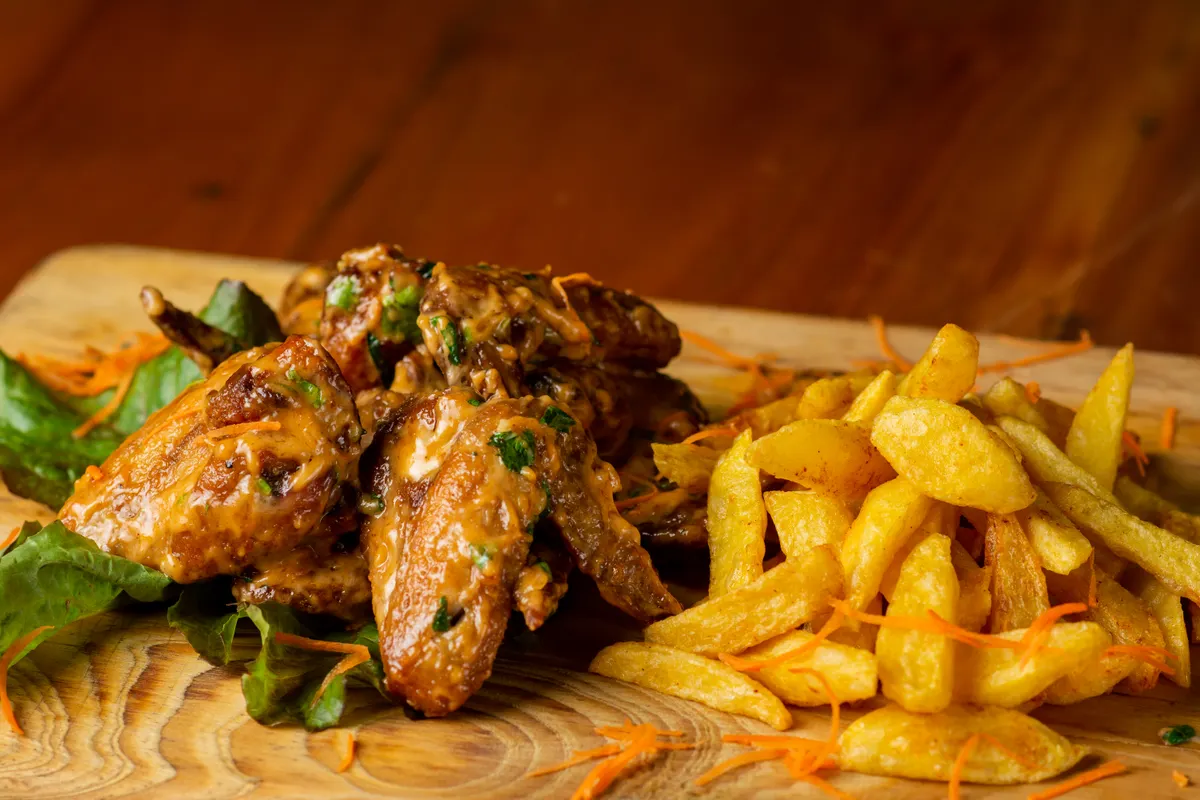
The five Hooters wings golden rules come straight from Becky Moore, Director of Brand Development and former Hooters girl, who visited the Delish Test Kitchen to break down exactly what separates an authentic plate of Hooters wings from everything else. Fresh chicken, hand-breading, Grade AA butter sauce, scratch-made dressing, and a Hooters girl to serve them, Moore says all five are non-negotiable.
A Chain Built on These Standards Since 1983
The context matters here. According to Original Hooters, the first restaurant opened its doors on 4 October 1983 in Clearwater, Florida, and the five principles Moore outlines have underpinned the offering ever since. The chain did not stay in Clearwater for long. In 1984, the original owners sold expansion and franchise rights to Neighborhood Restaurants of America, a group of Atlanta investors who then formed Hooters of America, Inc., according to Company Histories. That rapid early growth spread the Clearwater formula across the United States and, eventually, around the world, which makes Moore’s insistence on consistency all the more pointed. Decades of expansion have not softened the standards, at least not according to the brand.
There is also a cultural shorthand to the chain that goes beyond the food. Fox News has reported that the chain’s owl mascot carries the name Hootie, a detail that sits alongside the operational rules Moore describes as the less-discussed fabric of the brand identity.
The Five Rules Moore Lays Out
Rule one is freshness. Moore is unambiguous: wings must start with fresh chicken, never frozen. She frames it as the single most important variable in the final flavour, and one the brand will not compromise on regardless of logistical pressure. The difference, she says, is detectable in the finished product.
Rule two is hand-breading. Every day, Hooters wings are hand-breaded in seasoned flour. The process is what produces the crispy, textured coating the chain is associated with, and Moore is clear that there are no shortcuts in that step. Automation is not part of it.
Rule three concerns sauce, and specifically the ingredient that makes the Buffalo sauce work. Grade AA butter is the key component, giving the sauce its richness and what Moore describes as an authentic taste. She presents it not as a trade secret reluctantly shared, but as the explanation for why the sauce has retained its following since the Clearwater opening.
Rule four is dressing. Bottled dressing does not appear at a Hooters, according to Moore. Both ranch and blue cheese are made fresh from scratch every single day in each restaurant. She treats this as non-optional, the same category of commitment as the fresh chicken rule.
Rule five is the most specific to the Hooters experience as a whole rather than to the wings themselves: they must be served by a Hooters girl. Moore’s point is that the food and the service model are inseparable in terms of what makes the experience authentic. Taken together, the five rules read less like a recipe and more like a franchise operating philosophy kept remarkably stable across four decades.
What the Rules Reveal About the Brand
What Moore’s five-point breakdown actually demonstrates is how much of the Hooters identity rests on operational discipline rather than culinary complexity. None of the rules involve a technically demanding technique. Fresh over frozen, hand-breaded rather than machine-processed, butter in the sauce, dressing made on-site, service delivered by a specific type of staff member: each rule is straightforward to state and, presumably, straightforward to verify at restaurant level.
That consistency is what franchise growth depends on. When Hooters of America, Inc. began expanding the concept from Atlanta in 1984, the challenge was replicating something that had worked in one specific location. Moore’s rules suggest the brand’s answer to that challenge has always been procedural: keep the inputs controlled, keep the process manual where it counts, and the output looks after itself.
The chain will mark its founding date of 4 October 1983 as the origin point of every wing that follows those rules today, forty-plus years on from that first Clearwater service.