


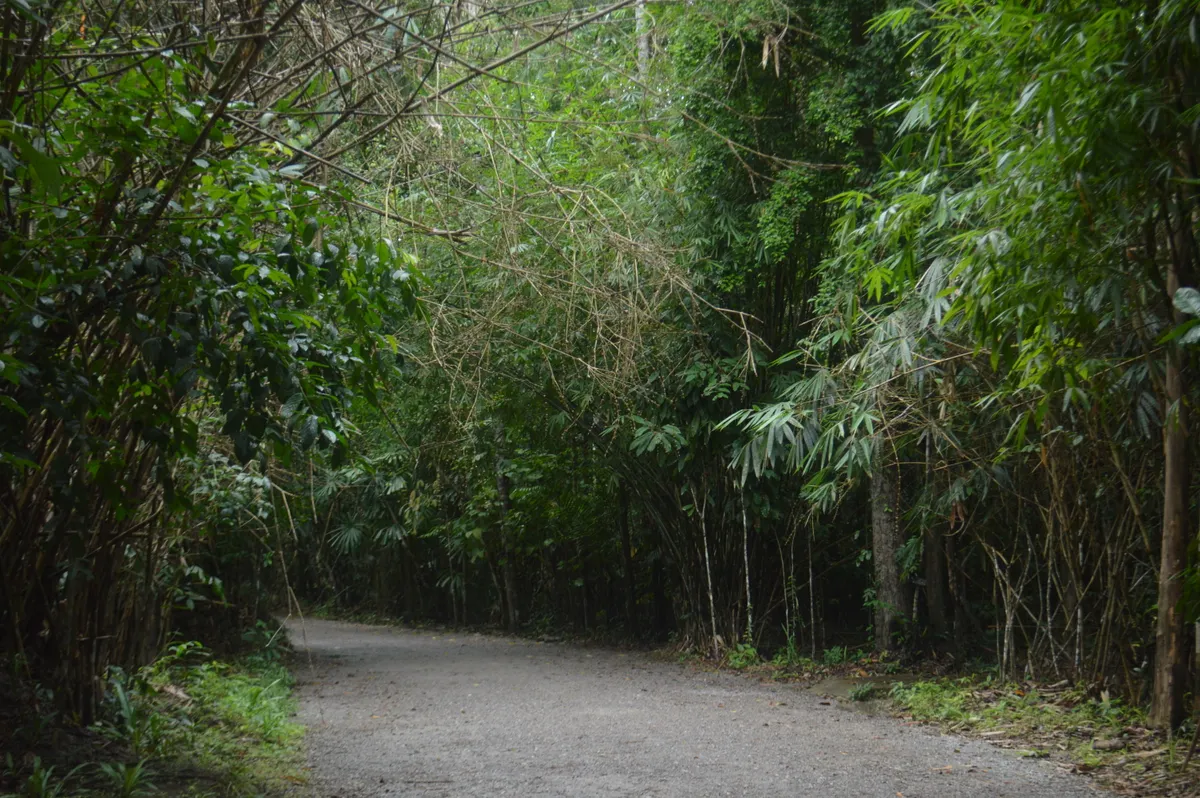
The GoRuck Ruck Flow Retreat does not promise comfort, and writer Chandler Plante found that out within the first 15 minutes. Somewhere on a 4.75-mile trail through the Costa Rican rainforest, carrying a 12-pound rucksack, she fell to the back of the pack and stayed there, sweating, breathless, and quietly reconsidering the whole enterprise.
The annual women-only retreat, structured across four nights in Costa Rica, combines strength training on the beach, a five-mile jungle ruck through the Osa Peninsula, and a nine-mile trek across Corcovado National Park. A ruck, for the uninitiated, is a weighted walk, and GoRuck has built its identity around the idea that discomfort, embraced deliberately, produces something worth having.
A Different Kind of Participant
Plante is a stroke survivor who lost her right eye to illness. She writes candidly about the gap between what challenge means in the fitness world and what it means when some days brushing your teeth constitutes a genuine ask. That tension ran through her entire week in the Osa Peninsula: how hard to push, when to hold back, and whether the physical stress might trigger a flare-up that outlasts the trip itself.
Still, she completed the ruck. And when she approached the finish, roughly 20 GoRuck participants had already assembled, forming an arch with their hands and calling her through. ‘This is so embarrassing,’ she told the tour guide. She ran through anyway, and later called it the highlight of her day.
That moment captures something real about how the GoRuck Ruck Flow Retreat operates. The itinerary is demanding by design, but the atmosphere it generates is not competitive in any conventional sense. Finishing is enough. Finishing last, it turns out, still gets you the arch.
GoRuck Ruck Flow Retreat: The Tree Jump
The following morning brought what was billed as a leisurely hike to a strangler fig tree. It was, predictably, nothing of the sort. The route involved scrambling up a waterfall on hands and knees before arriving at a 70-foot tree the group was invited to climb and leap from.
Plante climbed it. At the top, heart rate elevated and a small audience watching from below, she made the call to jump. Her harness caught her as she swung through the canopy, flipping upside down above the forest floor. The video she later shared with her family prompted her brother to text that he would never have imagined her doing it. A week earlier, she would have agreed with him.
The strangler fig moment is the retreat’s clearest metaphor, and GoRuck clearly knows it. Fear addressed with levity is a phrase Plante uses, and it threads through the programme’s philosophy. Coaches do not push participants toward recklessness; they construct environments where calculated risk becomes easier to accept.
What the Women Who Come Here Are Looking For
GoRuck co-founder Emily McCarthy told Plante that the Ruck Flow crowd tends to attract a particular type of person, and it is not necessarily the most experienced athlete in the room. Healthcare workers seeking adventure, a woman who did not get to properly mark her 50th birthday, a former free solo climber still testing herself, these were among the participants on this year’s trip. Being that this is only the second Ruck & Flow retreat GoRuck has run, McCarthy was asked whether the group felt meaningfully different from the first. She said no.
‘It’s about moving at your own pace, rather than finishing someone else’s race,’ McCarthy said.
The GoRuck Ruck Flow Retreat, structured as a four-night programme, is designed around that principle. The itinerary is fixed and the terrain is the terrain, but the framework accommodates different bodies moving through it in different ways. Plante found herself one of the last to finish most activities. She also found herself climbing a 70-foot tree and jumping off the top.
The Rucking Trend Behind the Retreat
Rucking itself has grown considerably as a fitness discipline, and Plante describes it as one of this year’s hottest fitness trends, noting the physical benefits alongside what she calls ‘type-two fun’: painful in the moment, satisfying in retrospect, sometimes within minutes of stopping. The model maps neatly onto what GoRuck sells: not enjoyment as a primary product, but the retrospective satisfaction of having done something that looked improbable from the start.
Plante left the Osa Peninsula having completed a nine-mile national park trek, a waterfall scramble, and a jump from a forest canopy. She describes knowing her body well enough to assert its limits as a form of pride, separate from the physical accomplishments. The next POPSUGAR-published account of the trip includes her full breakdown of kit and training preparation ahead of the 2026 edition of the Costa Rica programme.