


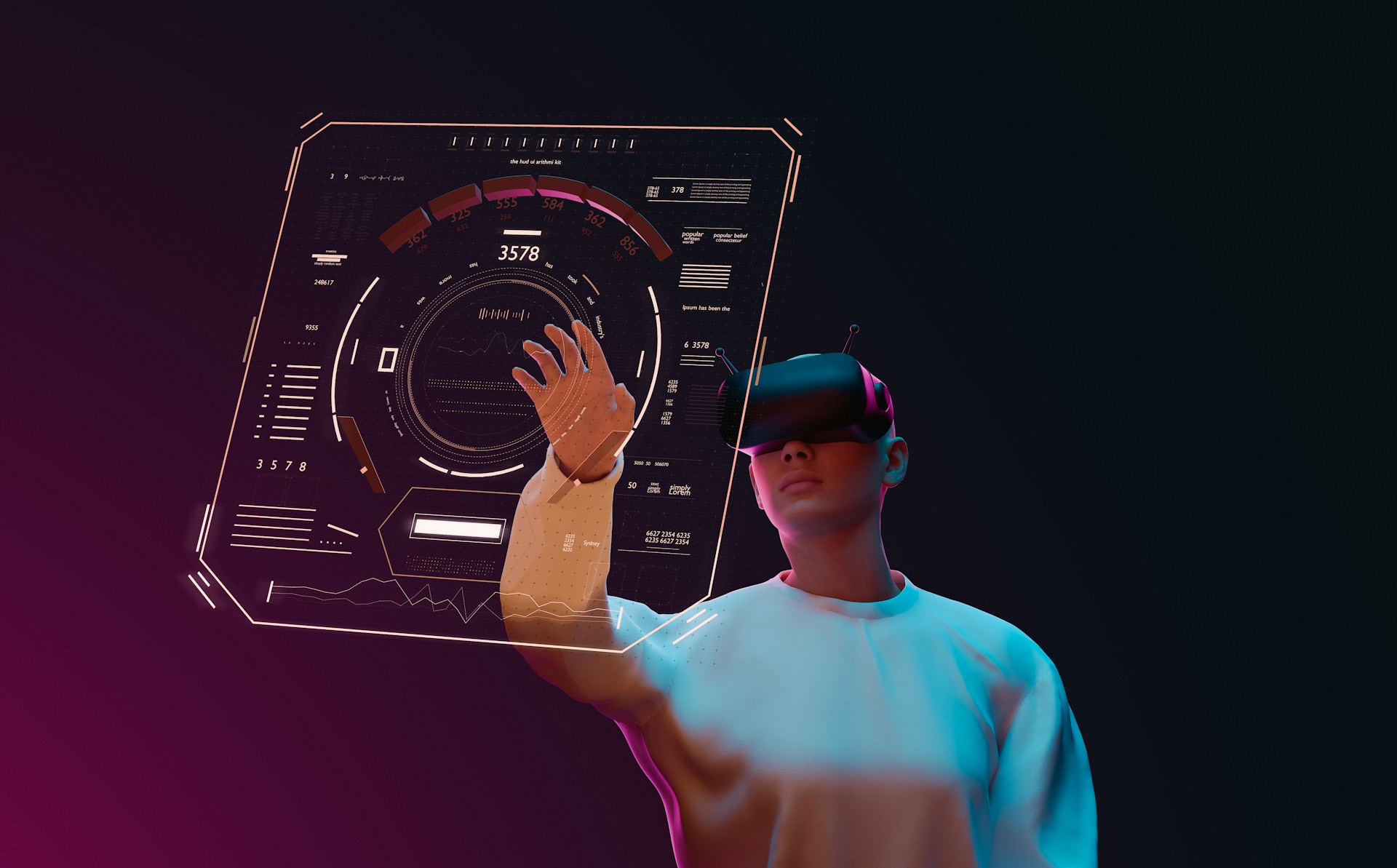
Introduction: a new era of technology
Augmented reality (AR) has long ceased to be exclusively a feature of science fiction. Today, this technology is changing the way people interact with the world around them, making it more interactive and exciting. In the UK, AR is being actively implemented in both commercial and educational projects, allowing citizens to experience innovation first-hand.
Augmented reality technology works by superimposing digital objects onto the real world. It is not only entertainment, but also a tool for increasing productivity, learning and business development. AR has the potential to change the approach to shopping, medical procedures, space planning and even historical education. Just as users are looking for alternative entertainment platforms, such as non gamstop casino, organisations and companies are integrating AR to provide a personalised and engaging experience for customers. Today, every industry that actively uses technology is seeking to integrate AR into its processes, making them more efficient and innovative.
In this article, we will look at five key areas where augmented reality is having the most significant impact, changing people’s lifestyles, business models and approaches to learning.
1. Retail and e-commerce
Modern stores use AR to create an interactive shopping experience. British brands are actively implementing virtual fitting rooms and mobile applications that allow users to evaluate products without physical contact.
Advantages of AR in retail:
- The ability to ‘try on’ clothes, shoes or accessories using a smartphone;
- Visualisation of furniture or decor in your own space;
- Increased customer loyalty through interactive features;
- Reduced returns due to unmet expectations.
British retailers such as John Lewis and Marks & Spencer are actively using augmented reality in their online platforms.
2. Education and training
AR technology has opened up new horizons for teachers and students. Universities and schools in the UK are using augmented reality for interactive teaching of complex subjects.
How AR helps in learning:
- Visualisation of human anatomy or cell structure;
- Simulations of chemical reactions and physical processes in 3D;
- Virtual historical journeys for a better understanding of the past;
- Support for distance learning through interactive applications.
This approach allows students to better absorb the material, experiment in a safe environment, and feel engaged in the learning process. Teachers note that integrating AR into the curriculum increases student motivation and performance.
3. Medicine and healthcare
Augmented reality is transforming the medical industry, helping doctors and patients. In the UK, AR is used in surgery, diagnostics, and rehabilitation, making the treatment process more accurate and safer.
Practical examples of AR in medicine:
- Visualisation of internal organs during surgery;
- Simulations of complex procedures to train surgeons;
- Apps to track patient rehabilitation;
- Interactive training programmes for medical students.
4. Gaming and entertainment
The gaming industry was one of the first to massively implement augmented reality. In the UK, AR games have gained popularity among young people and adults, offering a unique interactive experience.
The impact of AR on entertainment:
- Combining the real world with virtual objects;
- Interactive quests and adventures in urban environments;
- New formats for concerts and performances with AR effects;
- The ability to create content in real time using AR applications.
5. Architecture, construction and industrial design
AR is radically changing the approach to space planning and industrial projects. British architectural firms are actively using augmented reality to visualise buildings and engineering systems.
The use of AR in construction:
- Virtual models of buildings and interiors;
- Interactive verification of plans and designs;
- Simplified communication between architects, engineers and clients;
- Improved safety on construction sites through AR simulations.
Conclusion: AR as a factor of change in the modern world
Augmented reality has already proven its effectiveness in five key areas: retail, education, medicine, gaming, and architecture. The implementation of AR in the UK demonstrates that the technology can improve user experience, increase workflow efficiency, and drive innovation.
The future of AR looks even more exciting: the development of artificial intelligence, cloud services, and mobile platforms opens up new opportunities for interactive solutions. Companies and educational institutions that actively integrate augmented reality into their projects gain a competitive advantage and shape the modern perception of technology.
Augmented reality is becoming not just a tool, but a platform for creativity, education and business development. Those who implement AR today are setting the standards for the digital world of tomorrow.
